
"Spanish coffee"
3000 article(s) found

Introduction of Coffee Flavor and Taste characteristics of Congo Manor in Nicaragua
Columbus arrived here in 1502 and reached the east coast of Nicaragua. In 1522, Spanish colonists began to conquer the region. The cities of Granada and Leon were founded in 1524. From then on, Nicaragua became a Spanish colony and came under the jurisdiction of the Governor's Office of Guatemala. The city of Leon developed into a political and cultural center; Granada became a commercial and agricultural center. In the later period of colonial rule

Introduction to the flavor and taste characteristics of Columbia Hope Manor Coffee Manor with a long history
In his letter from Jamaica in 1815, Bolivar envisioned that when South America was liberated from Spanish colonial rule, New Granada and Venezuela should form a country, named Colombia. In August 1819, Bolivar's Patriotic Army defeated the Spanish colonial army at the Battle of Boyaca and liberated Bogota. So, New Granada and Venezuela

Introduction to the flavor and taste characteristics of Puerto Rico boutique coffee bean manor
In Spanish, Puerto Rico means the port of wealth. The history of coffee in Puerto Rico dates back to 1736, when coffee seedlings were brought into the country by early Spanish settlers. In the 18th world, sugar cane was the main economic crop, so little attention was paid to it. At the beginning of the 19th century, the French began to move from the Mediterranean island of Corsica because of European politics.

Flavor description of Dominican coffee with mellow taste introduction to the characteristics of the taste of grinding degree
In 1677, about 4,000 French lived in 11 villages in the west of the island. In 1697, France and Spain ceded the western part of the island to France according to the Leswick Treaty of the Alliance War, formally recognizing French sovereignty over Haiti in the western part of the Spanish island, and the eastern part of the Spanish island was called East Santo Domingo. France continues to develop its agricultural economy on the island of Hispaniola.

Lares Yaoko Coffee Bean Variety Planting Market Price Profile
Island Coffee-Puerto Rico and Jaime Fortuno, president of Escogido Yauco agency, quietly watches all this work every year, even in the smallest detail. Fortuno is an investment banker and a graduate of Harvard Business School. He was determined to seize every opportunity to create a market for Puerto Rico's finest coffee
Philippine Coffee | Origin of Philippine Coffee cultivation History _ introduction to Philippine Coffee Bean producing areas
Coffee cultivation in the Philippines was mainly during the Spanish colonial period. In order to promote enlightenment, Spanish colonists proposed that they could be rewarded by planting 16000 square feet of coffee trees (equivalent to 6000 coffee trees). So a local farmer turned his farm land into a coffee plantation.

Description of Dominica Coffee Flavor with mellow taste A brief introduction to the characteristics of the varieties of Grinding degree
In 1677, about 4,000 French lived in 11 villages in the west of the island. In 1697, France and Spain ceded the western part of the island to France according to the Leswick Treaty of the Alliance War, formally recognizing French sovereignty over Haiti in the western part of the Spanish island, and the eastern part of the Spanish island was called East Santo Domingo. France continues to develop its agricultural economy on the island of Hispaniola.

Introduction of Peruvian Coffee Variety characteristics of Fine Coffee Bean Flavor Manor
In 1542, the Spanish royal family set up the Government House in Lima and established the Governor's District of Peru, which became the center of Spanish colonial rule in South America. At that time, Peruvian commerce was prosperous, merchants controlled most of South America's import and export trade, and the precious metals and other goods looted by the Spaniards from South America were shipped out of Peru. The colonists encroached on land in Peru, forced the Mita system, and forced the Indians to

Introduction of Flavor characteristics of Fine Coffee beans in Dominica Santo Domingo Coffee Variety producing area
In 1677, about 4,000 French lived in 11 villages in the west of the island. In 1697, France and Spain ceded the western part of the island to France according to the Leswick Treaty of the Alliance War, formally recognizing French sovereignty over Haiti in the western part of the Spanish island, and the eastern part of the Spanish island was called East Santo Domingo. France continues to develop its agricultural economy on the island of Hispaniola.

Description of Puerto Rican Coffee Flavor with good Compliance and balance introduction to the degree of Baking in the production area of Grinding degree of varieties
Puerto Ricans are the general name of the residents of United States Puerto Rico in Central America and the Caribbean. There are about 3.4 million people (1979). Spanish and English are widely used. More Catholic. The earliest inhabitants of Puerto Rico were Arawak and Caribbean Indians. In 2012, whites of European origin accounted for about 73% of the population, mixed-race people accounted for 23%, and blacks accounted for 4%. There are more than 20,000 Americans and others.

Dominic Coffee with pleasant Flavor Flavor and Taste introduction to Fine Coffee in Manor area
In 1795, France and Spain signed the Basel Peace Treaty in Switzerland, agreeing to cede the Santo Domingo area in the eastern part of the Spanish island to France, making the Spanish island a complete French colony. Six years later, Toussaint Lovidur, a black Haitian, led other black slaves to revolt against French rule, and in 1801 captured Santo Domingo, which had just ruled France, thus unifying the whole West.

Introduction to the flavor and taste of boutique coffee beans in the coffee variety producing area of San Pedro Manor, Puerto Rico
In 1898, the Spanish-American War broke out and Spain was defeated. According to the Treaty of Paris, Puerto Rico was ceded to the United States. The administrative jurisdiction of the United States over Puerto Rico first took the form of a military junta. During its two years of governance of the island, the junta established schools, roads, railways, hospitals and health facilities. In 1900, the United States Congress established civilian control over the island. The Governor, the Cabinet and

Introduction to the flavor and taste of boutique coffee beans in Tianyi Manor, Nicaragua
Columbus arrived here in 1502 and reached the east coast of Nicaragua. In 1522, Spanish colonists began to conquer the region. The cities of Granada and Leon were founded in 1524. From then on, Nicaragua became a Spanish colony and came under the jurisdiction of the Governor's Office of Guatemala. The city of Leon developed into a political and cultural center; Granada became a commercial and agricultural center. In the later period of colonial rule

Columbia Coffee Manor with Pure Taste introduction to the Flavor of Hope Manor planting Environment
In 815, Bolivar envisioned in his letter from Jamaica that when South America was liberated from Spanish colonial rule, New Granada and Venezuela should form a country, named Colombia. In August 1819, Bolivar's Patriotic Army defeated the Spanish colonial army at the Battle of Boyaca and liberated Bogota. So, New Granada and Venezuela

Introduction to the characteristics of Puerto Rican Coffee Flavor description and treatment
The Spanish-American War of 1889 ended with the victory of the United States, ending more than 400 years of Spanish rule over Puerto Rico. The demand for sugar in the United States has increased significantly, while the hurricane destroyed most coffee plantations, and the coffee industry in Puerto Rico was hit hard by natural and man-made disasters. In the 20th century, the national economy of Puerto Rico developed rapidly, with the strong support of the government and the local government.
Introduction of boutique coffee beans in coffee flavor and taste areas of Chateau Saint Roman, Costa Rica
1502 C. Columbus discovered the coast of Costa Rica on his fourth voyage. Since then, the Spanish colonists have invaded many times. The city of Catago was founded in 1563 and Costa Rica was colonized by Spain and placed under the jurisdiction of the Governor's Office of Guatemala. During the colonial period, under the cruel enslavement and oppression of the Spanish colonists, the Indians were almost wiped out and there was little labor available for enslavement.

Introduction to the characteristics and varieties of Colombian Coffee Flavor Manor
After the news of Napoleon I's invasion of Spain in 1808 spread to Colombia, the people of that place immediately launched an independence movement. On July 20, 1810, a large-scale uprising against Spanish colonial rule broke out in Bogota and the Governor of New Granada was arrested. In November 1811, representatives from all over the world organized Congress in Bogota and established the New Granada Joint Provincial Government, which was announced on November 11.

Introduction to the characteristics of Puerto Rico boutique coffee with complete flavor and no bitterness
On September 23, 1869, the people of Puerto Rico were in R. Under the leadership of Emmetrio Betons, an uprising was held in the town of Larez (known as the voice of Larez in history), which declared the establishment of a republic on the 24th and was later suppressed by the Spanish colonial army. After a long struggle, Puerto Rico was finally granted local self-government by Spain. However, from then on, after the Spanish-American War, the island became an American colony, when

Introduction to the characteristics of the manor producing area with a unique flavor of Puerto Rican coffee
In 1898, the Spanish-American War broke out and Spain was defeated. According to the Treaty of Paris, Puerto Rico was ceded to the United States. The administrative jurisdiction of the United States over Puerto Rico first took the form of a military junta. During its two years of governance of the island, the junta established schools, roads, railways, hospitals and health facilities. In 1900, the United States Congress established civilian control over the island. The Governor, the Cabinet and
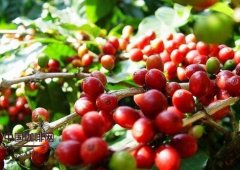
Columbia Santa Rita santa rita Colombian boutique coffee beans
Colombia Santa Rita Special Reserve country: Colombia: Antioquia altitude: 1600-2100 m treatment: washed varieties: Kaduai, Kaddura Manor: Santa Rita Flavor: sucrose, clean, medium alcohol thick Colombian coffee growing history can be traced back to the Spanish colonial era in the 16th century, coffee in Columbia